- Study
- A small reading room
- Status
- Unbuilt concept
- Material palette
- Oak and pale plaster
- Starting point
- A window seat
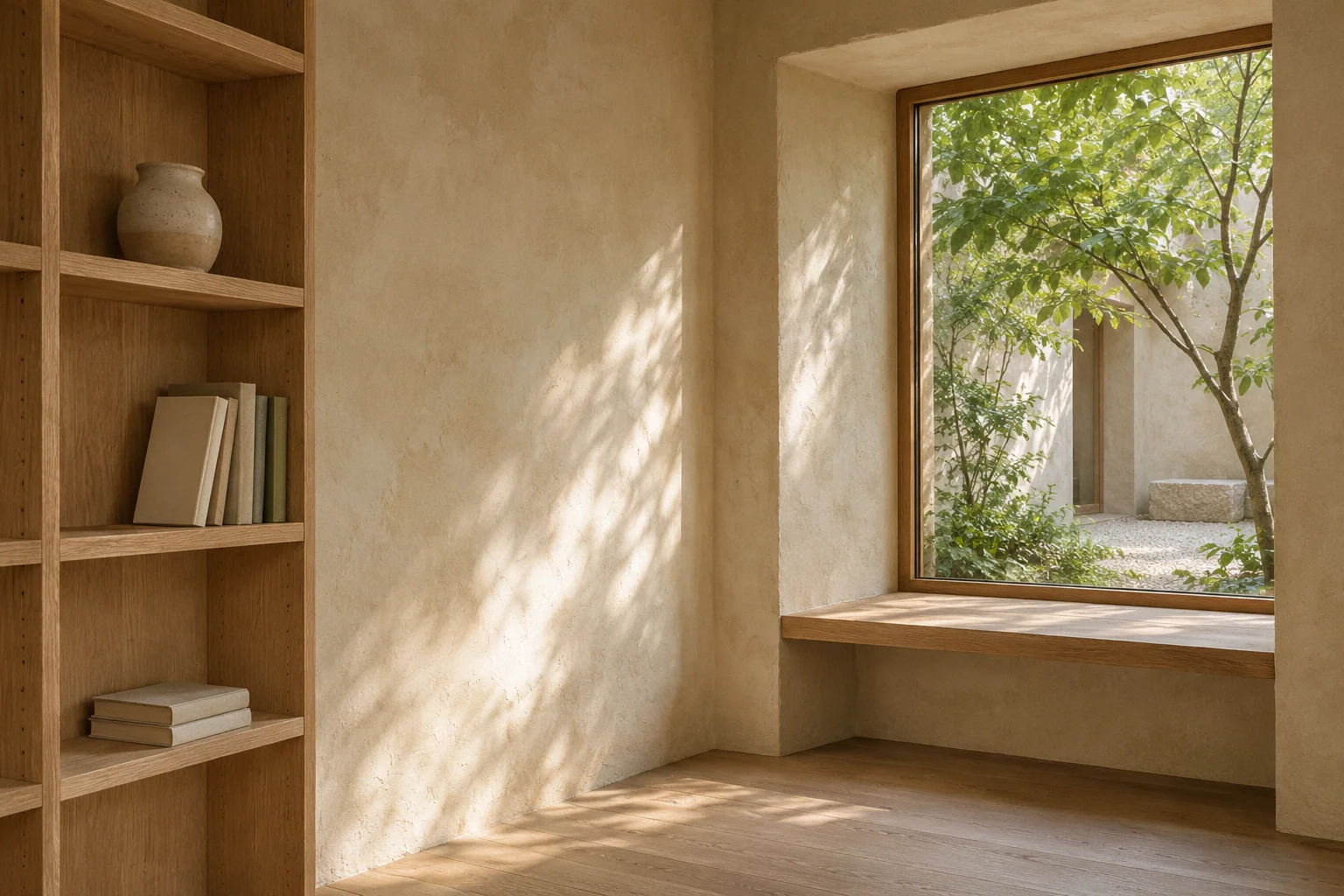
A reading room does not necessarily need its own door. It can begin with an unused edge of a living space, a view of a tree and a surface wide enough to sit on. This study gives that edge enough depth to feel like a small destination.
Give the wall a useful thickness
A continuous oak shelf links the window seat to a bookcase. The materials are deliberately quiet so the changing light remains the main event. Books are kept within reach, and the lower shelf offers somewhere to put a cup without balancing it on the sill.
The seat sits beside the view rather than directly facing it. That small shift makes it possible to read with light arriving from the side and to glance out without changing position. A cushion, a warm lamp and a reachable switch would complete the everyday use of the space.
Leave room for the ordinary
Storage should account for the books people actually own, including the awkward tall ones. A clear route in front of the seat matters more than a perfectly symmetrical elevation. In a real room, ventilation, glare, safety and a comfortable seat height would be checked together.
For more on the material choices, visit the material notebook.