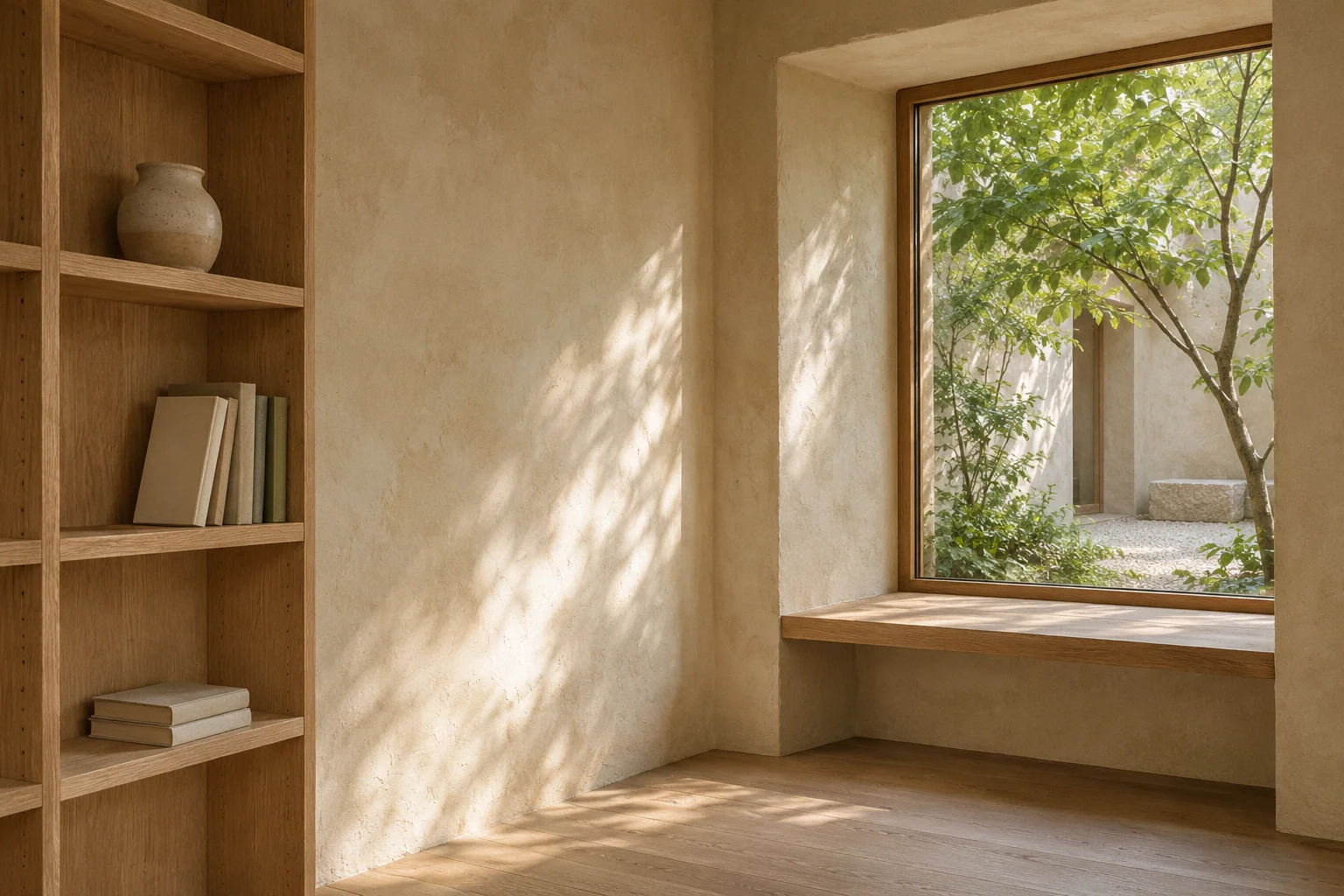
Timber
Grain, edge and touch matter as much as colour. Look at a sample under the light where it will be used. Ask how the finish is maintained and how the material moves with humidity.
Lime plaster
A subtle surface can make changing light visible. Substrate, moisture and workmanship affect the result, so a sample on the intended wall tells more than a photograph.
Brick
Consider the joint as part of the material palette. Size, exposure and mortar compatibility need as much attention as colour, especially when working with reclaimed pieces.
Stone
Finish changes both appearance and use. A polished sample and a textured sample from the same stone can behave quite differently underfoot and in oblique light.
Keep a sample library
A few labelled samples viewed together can make an abstract palette tangible. Record the supplier, finish and intended use, and revisit the set in morning and evening light. The point is to understand the materials before asking them to work together.
Read more in The useful life of an old brick.