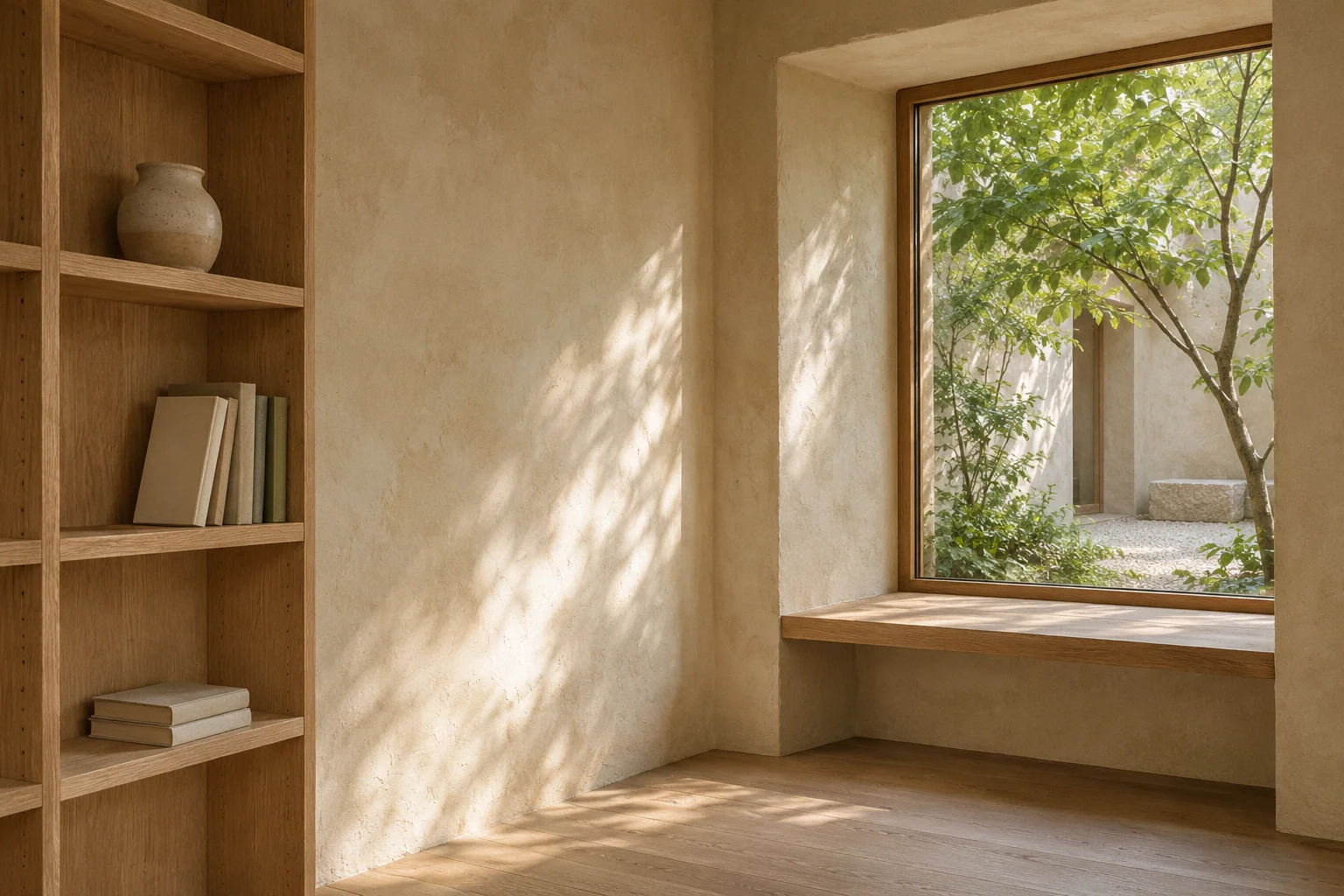
A room can be bright without being comfortable. A low winter sun may be welcome at breakfast and difficult to work beside later in the day. The first useful drawing is often a simple record of where light falls, and when.
Observe at different hours
Take a photograph from the same position in the morning, around midday and in late afternoon. Note the weather and the season. Look for reflected light as well as direct sun: a pale wall across a courtyard can bring a soft glow into a room that never receives a direct beam.
Then add the daily activities. Where is the laptop? Where does someone read? Is there a surface for preparing food away from the strongest glare? This ordinary list gives a window a purpose beyond making the facade look balanced.
Think about the edge
A window reveal, curtain or external shade changes how daylight meets the room. A deeper reveal can make a view feel framed, while a pale ceiling helps distribute light further inside. Bigger glass can also bring more heat and less wall space, so it is worth examining the whole room together.
Keep a seasonal note
A single sunny visit is not the whole story. Trees change, the sun sits lower in winter, and neighbouring buildings may cast a longer shadow than expected. If a project is moving beyond an initial idea, local climate information and a proper daylight assessment can help test the observations.
The courtyard study explores this relationship through several smaller openings rather than one continuous glass wall.